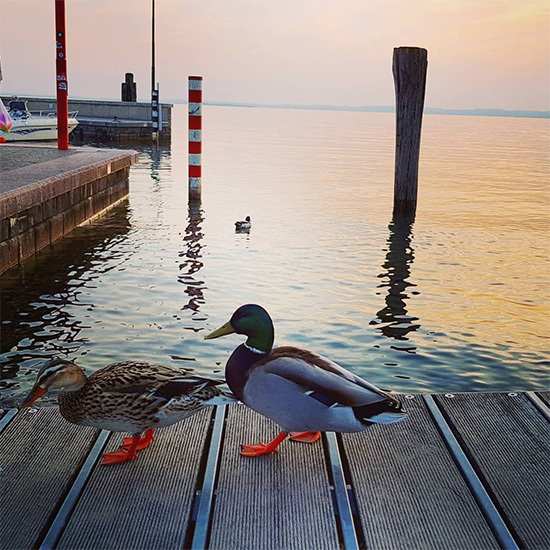
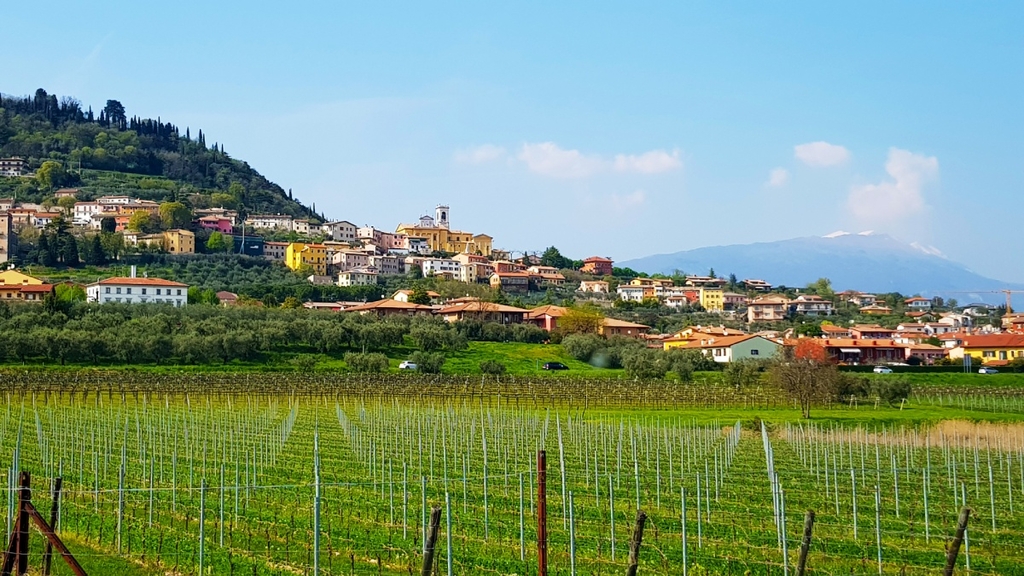
Amid the hilly landscape in the nearby hinterland of Lake Garda and just a few minutes from the lake, is located the picturesque village of Cavaion, which surprises with its authenticity.
Residential houses in warm, almost Mediterranean colours are situated on Mount San Michele, the village is nestled in an enchanting landscape amid olive groves, vineyards, and old orchards.
Time seems to pass more slowly here: between rural farms, stone walls, and old paths, you’ll perceive the history of a community which is deeply connected to its homeland.
A charming place: stone alleys, courtyards, and timeless viewpoints
A special feature of Cavaion are the old stone alleys, called Introi, which connect the differently elevated levels of the village. The term comes from the Rhaetian language and means "path".
These paths are often very steep, some of them date back to the Middle Ages, and are bordered by limestone walls in drywall construction. The best known are:
- l’Introl della Torre (Tower alley)
- l’Introl Soletti (Soletti alley)
- l’Introl del Festi (Festi alley)
- l’Introl Pozzetto (Fountain alley)
Also very impressive is the wide staircase of Via Garibaldi.
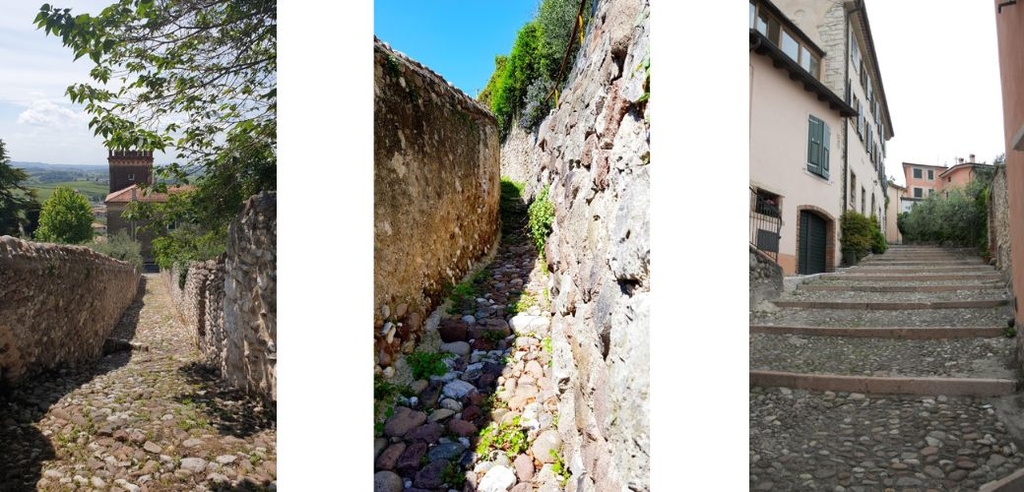 Introl della Torre, Introl Soletti, Scalinata di Via Garibaldi
Next to these stone alleys are old courtyards that bear witness to an agricultural life full of work and simplicity. After the restoration, they have preserved their rural charm, telling us 'small pieces' of local history.
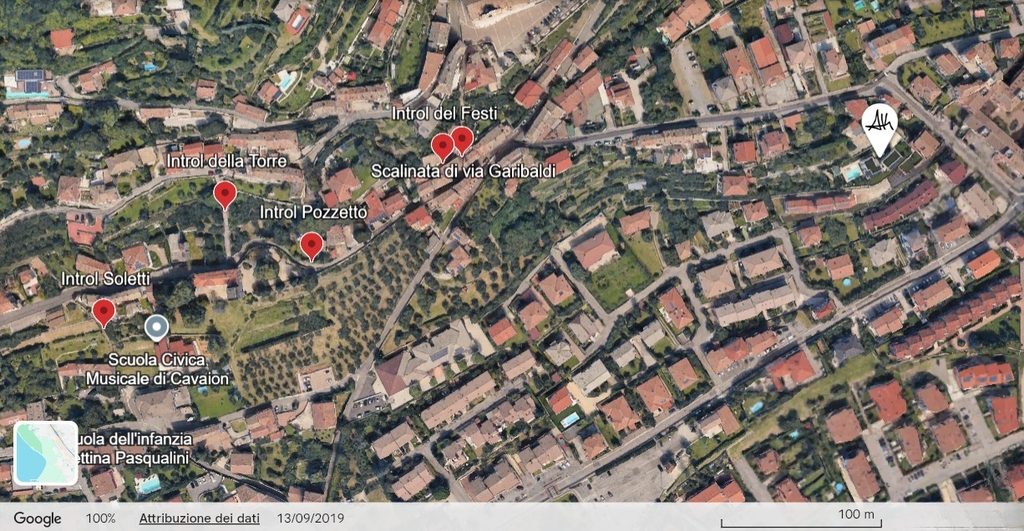 Map of the stone alleys (introi) in Cavaion Veronese
Mount San Michele: between history and panorama
The hiking trail on Mount San Michele
The landmark and symbol of the village of Cavaion is the 342-meter-high Monte San Michele, an elevation of ancient origin.
On the hiking trail of Mount San Michele, 12 thematic information boards explain details to hikers while exploring the area: interesting facts about geology, flora, fauna, and about the numerous historical finds from the Stone Age to the present.
The fortress San Michele
At the top of Mount San Michele are the remains of a fortress called Bastia di San Michele, which is historically very significant for the village of Cavaion.
In the Middle Ages, a small, fortified village was built in this strategic position, controlling the connecting routes between Adige Valley and Lake Garda. The settlement also had a church dedicated to Saint Michael that was expanded in the 14th century, probably to accommodate a religious community.
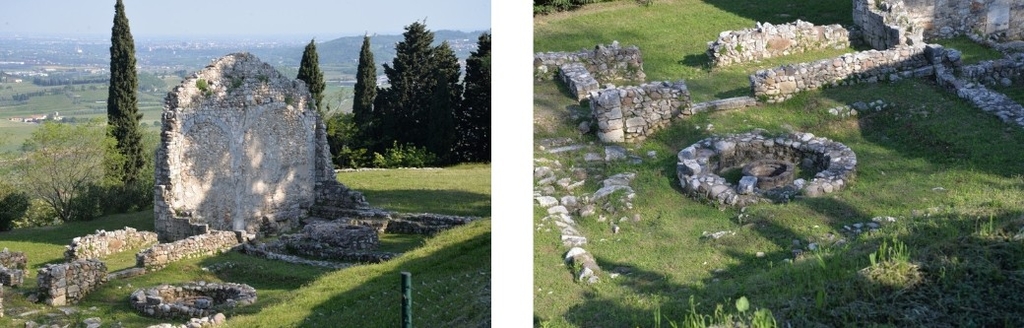 Ruins of Bastia di San Michele
Over the centuries, the village was gradually abandoned, and nowadays only ruins of the original structure have been preserved, providing an insight into the life of the ancient settlement.
Apart from its historical significance, this place offers one of the most impressive local viewpoints: from here, the view stretches over the surrounding hills, the vineyards, and the nearby Lake Garda.
 The fortress: Bastia di San Michele
Pile dwellings and ancient origin of the area
The area around Cavaion shows traces that are much older than one can imagine and are particularly visible at the pond Ca’ Nova which is located at the foot of the village.
In the area around the pond, remains of prehistoric pile dwellings have been found as evidence of human presence in earlier times. These finds (ceramic pots and bowls, bronze daggers, several objects made of flint and bone) are now displayed in the local archeological museum and are proof of ancient settlements near the lake, revealing the close relationship between humans and their environment in the past.
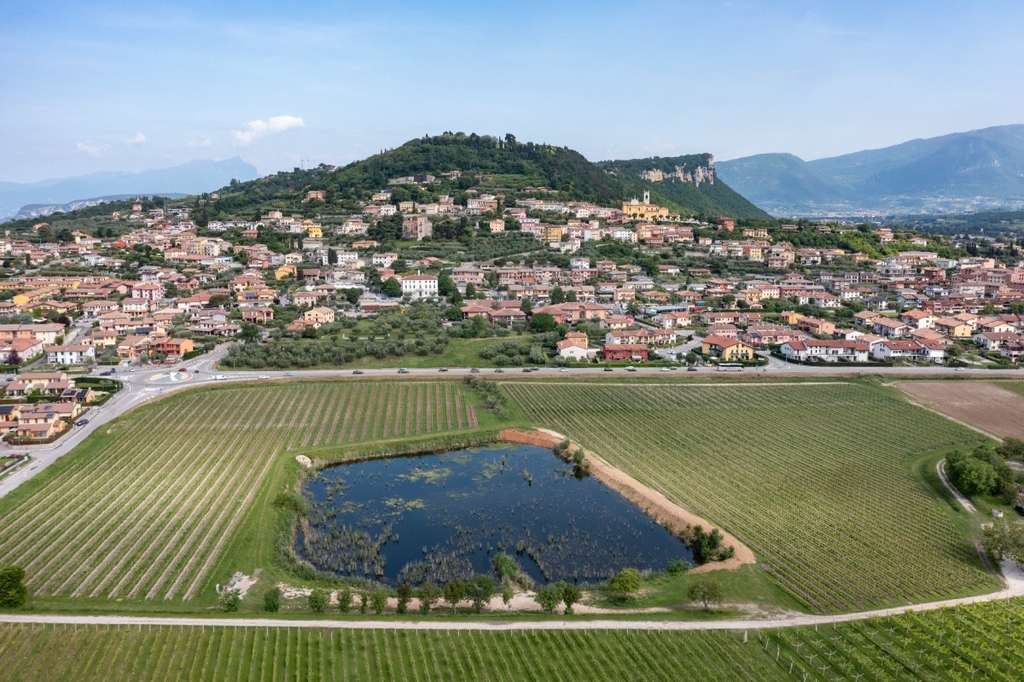 Pond Ca’ Nova - Photo of Massimo Fusaro
The Canal Bridge in Sega: engineering and modern history
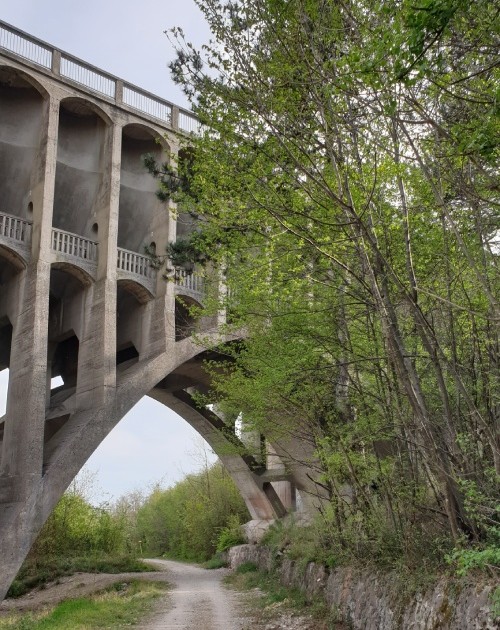
Among the sights of Cavaion Veronese is a lesser known but very interesting structure: the canal bridge in Sega.
This large infrastructure was built between the 1930s and 1940s to allow the canal Biffi to pass through the valley of the stream Tasso.
The approximately 47 km long canal is used for irrigation and energy production and brings the water of the river Adige into the Veronese plain.
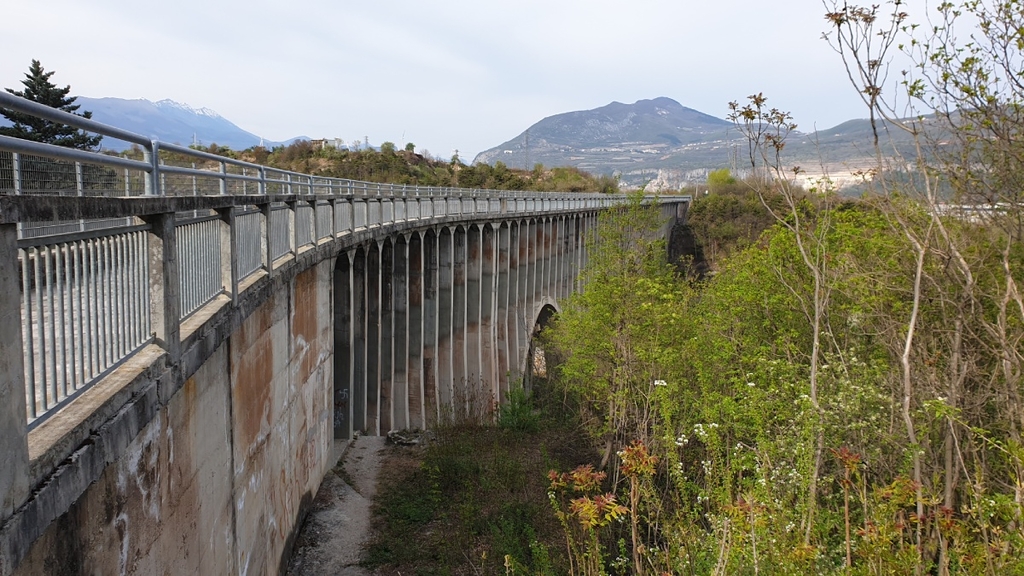 Canal Bridge Biffis
The olive park: nature and relaxation
Anyone seeking peace and contact with nature should plan a stop at the olive park.
This green area blends seamlessly into the typical landscape of Lake Garda, amidst olive groves and gentle hills. An ideal place for a relaxing walk or for a magnificent, panoramic view of the lake.
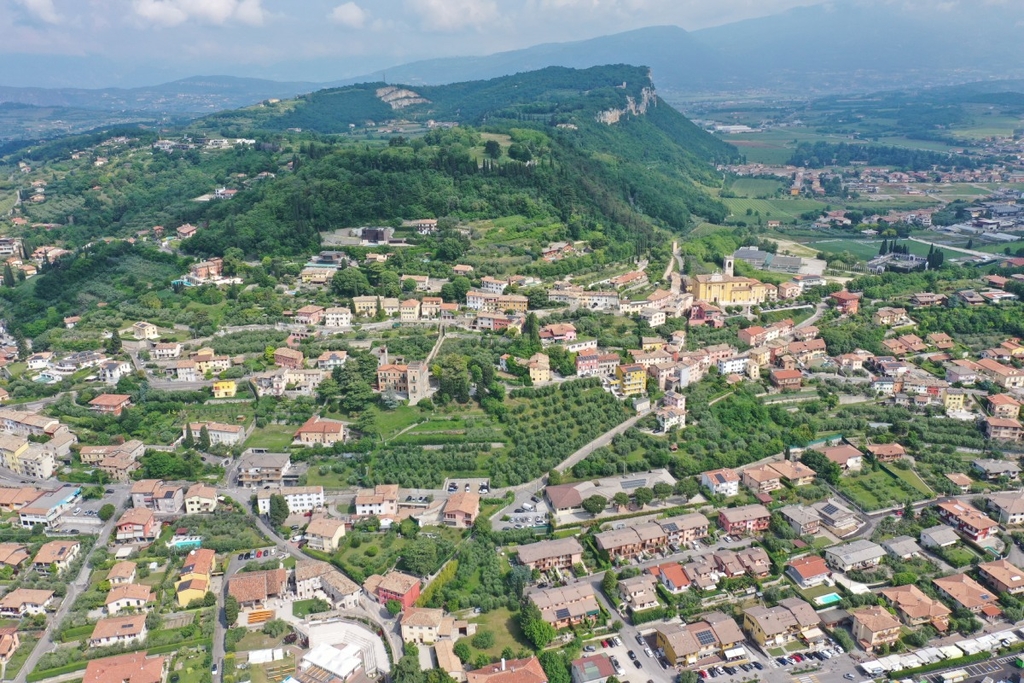 Olive Park - Photo of Luca Micheletti
The olive trees that shape this region are not only picturesque landscape elements but an important part of the traditional local agriculture: the high-quality Garda olive oil DOP, which is valued for its mild taste, comes from olive cultivation.
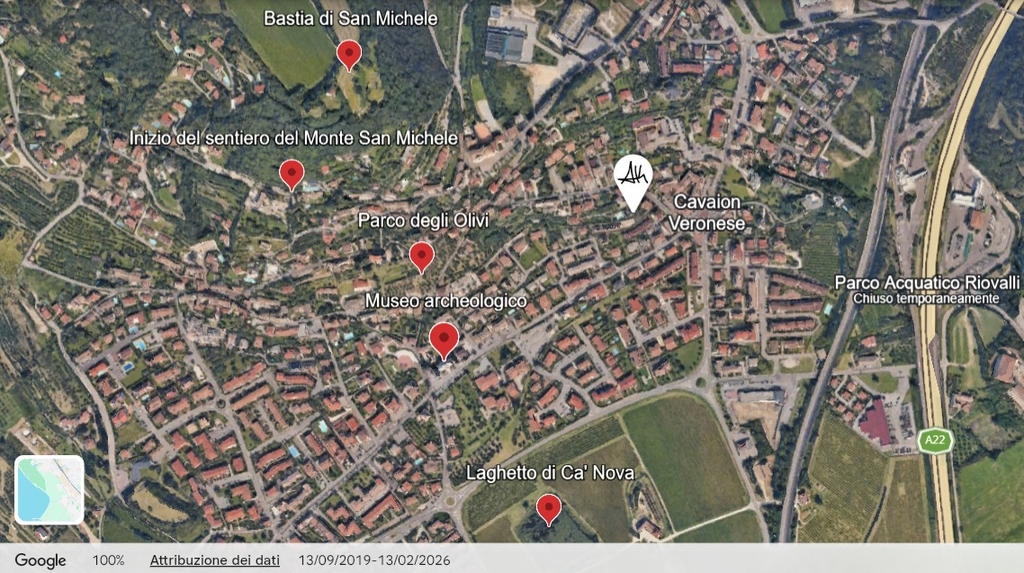 Map of Cavaion Veronese
Historical Villas in Cavaion
Some of the attractions of Cavaion Veronese are the historical villas and rustic courtyards, which show how the area has developed between agricultural activity and splendid mansions.
Next to buildings of aristocratic origin, which often belonged to wealthy families from Verona, there are still numerous courtyards that were once the center of rural life. Probably, Corte Torcolo enchants visitors the most; the name 'torcolo' refers to the presence of a press that was used for winemaking.
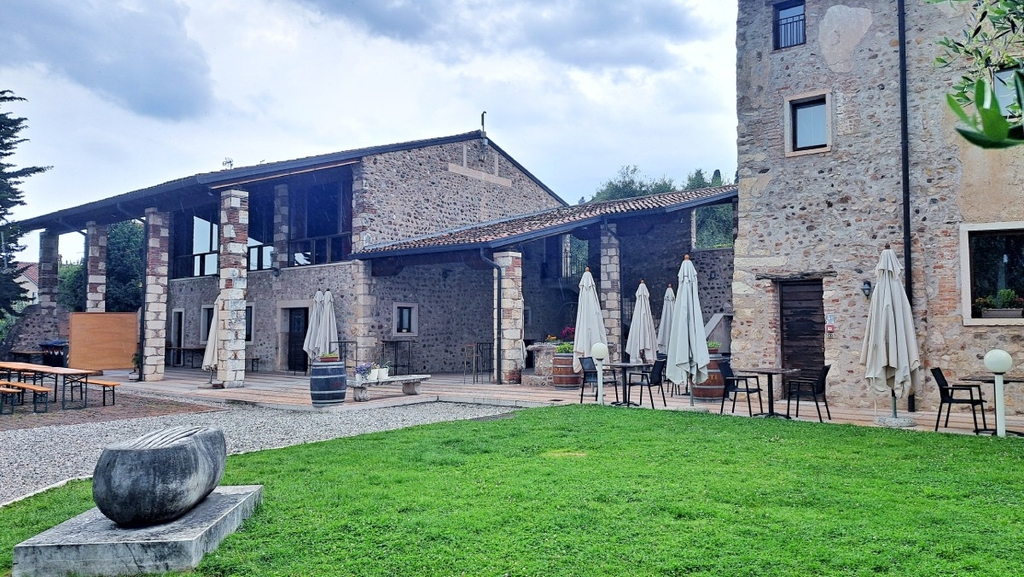 Corte Torcolo
Nowadays, the courtyard is the center of cultural activities in Cavaion and houses the community hall "E. Turri", the municipal library "G. Polanschi", and the open-air theater Arena Torcolo, where theater, music, and dance performances take place every summer.
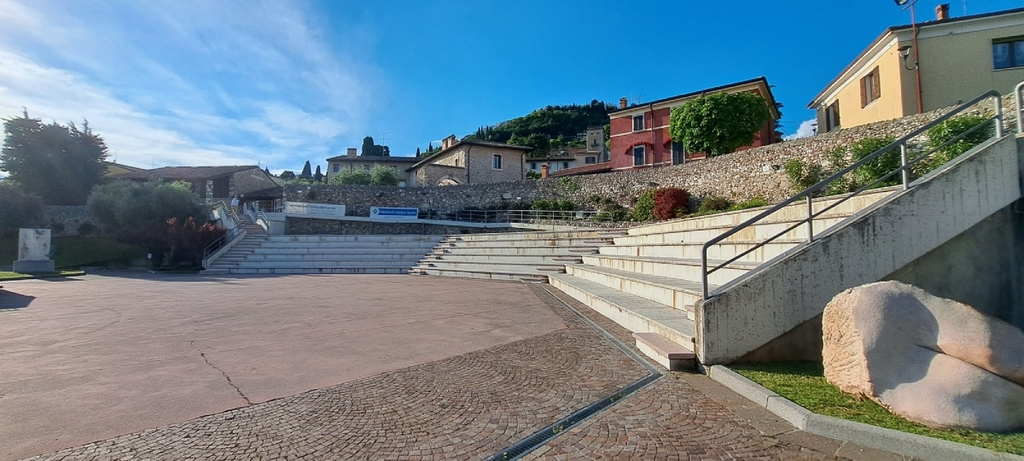 Theather Arena Torcolo
Other interesting buildings are:
- Villa Cordevigo: it probably dates from the Roman period and has once been a farm with a country estate, which has recently been converted into a 5-star hotel.
- Villa Trabucchi and Torre Civica (civic tower): it is a building complex with a medieval tower and a villa from the 19th century.
- Villa Bonazzo: it is located halfway along Via Belvedere in a panoramic location.
- Villa Ravignani-Ruggeri: this three-story building combines classical motifs with neo-medieval ones.
- Villa Trombetta: this magnificent villa is surrounded by walls with Ghibelline battlements and was built on an existing building from the 15th century.
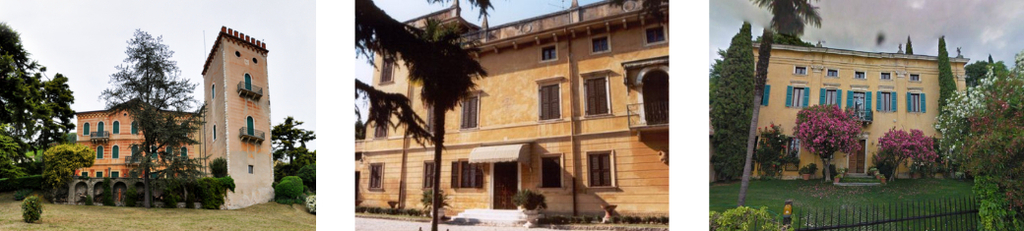 Villa Trabucchi, Villa Ravignani-Ruggeri, Villa Bonazzo
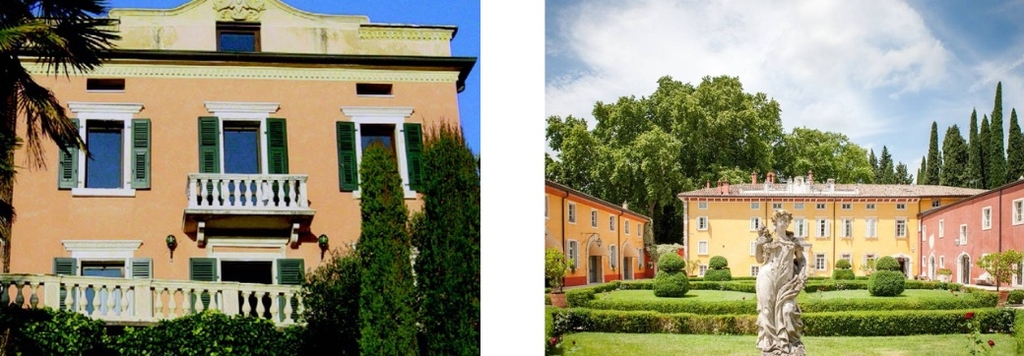 Villa Trombetta, Villa Cordevigo
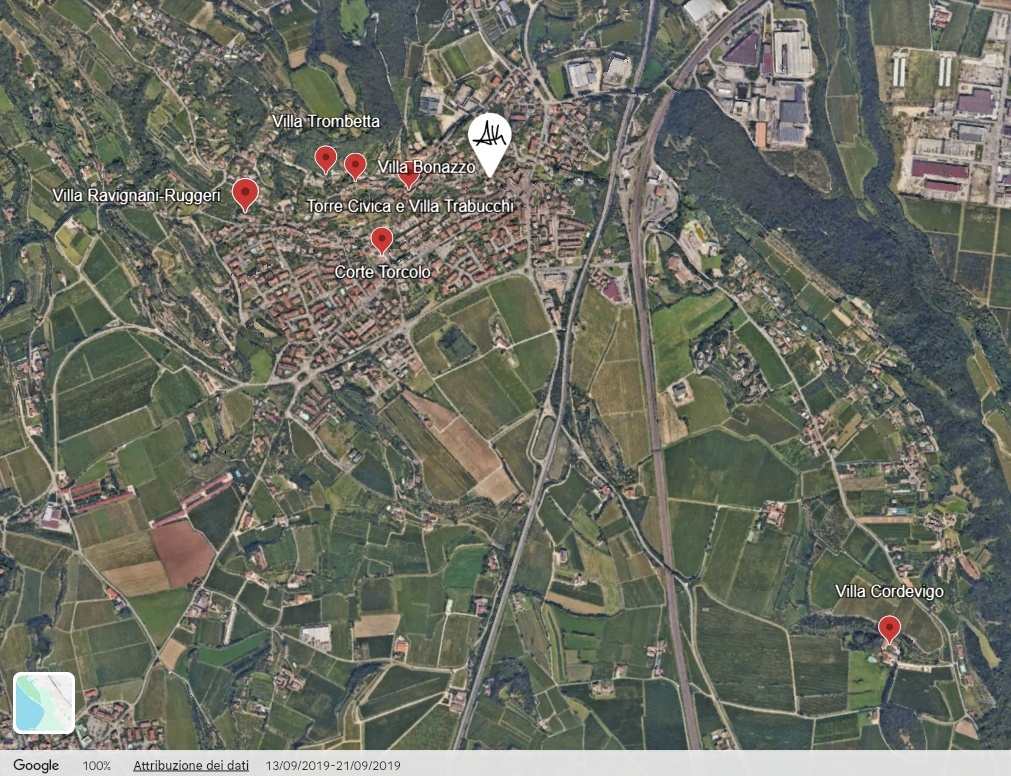 Map of the Villas in Cavaion Veronese
Remains of a Roman Villa
Noteworthy is also the discovery of the remains of a Roman villa near the pond on Via delle Fontane (therefore it is called Villa delle Fontane = Fountain Villa).
It is a rural building complex from the Roman Imperial era, probably used for agricultural and productive purposes.
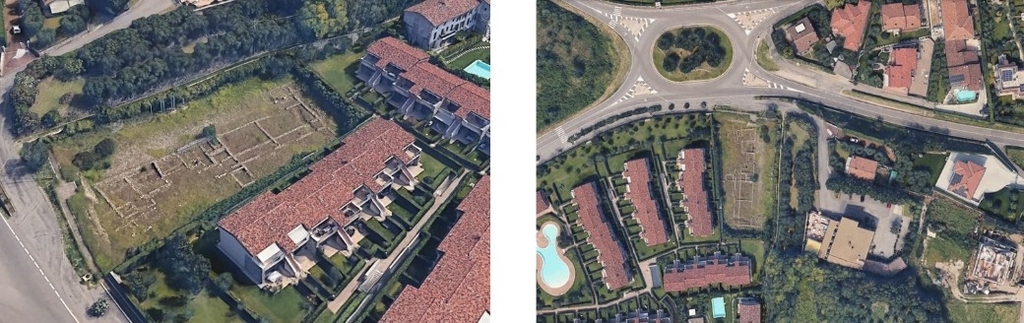 Remains of Villa delle Fontane – View from above
Over the centuries, the villa was gradually dismantled and its materials reused for other buildings, so only ruins are visible from the street.
The contrast between old and new is impressive: the remains are located next to the newly built residential complex, so to speak an epochal dialogue, telling us about the development of the local area.
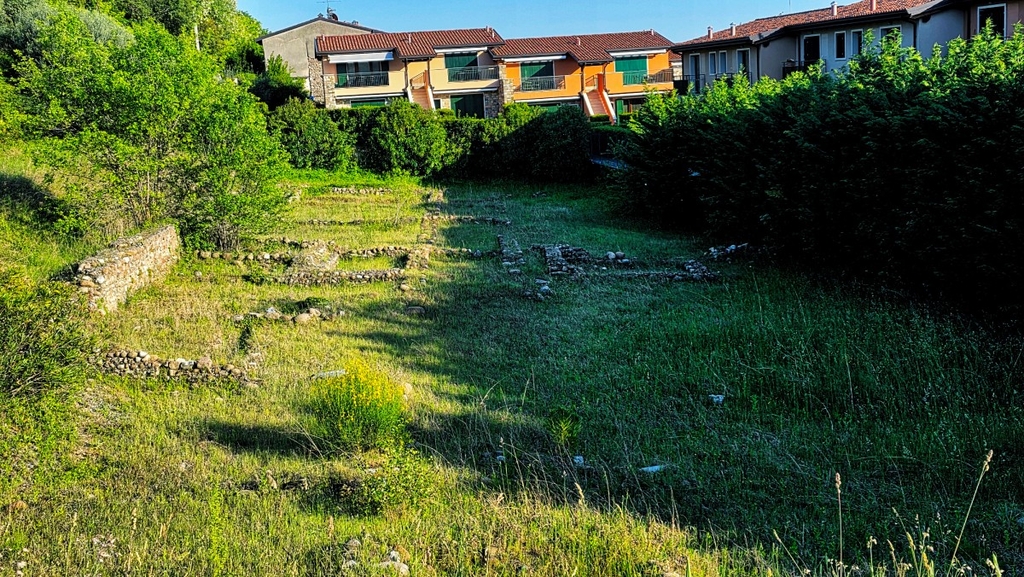 Ruins are visible from the street
A place to discover
Cavaion Veronese should be experienced in complete calm, while exploring the alleys, paths, landscapes, and viewpoints at leisure. This charming village does not try to impress visitors with grand monuments, but with its authenticity, history, and deep attachment to the native soil.
Anyone who wants to discover the less touristy side of Lake Garda while still enjoying beauty and different experiences is exactly in the right place in Cavaion.